Machines
Aircraft
Types and machines in context — not specifications for their own sake, but how each connects to squadrons and the fields they knew.
Machines
Types and machines in context — not specifications for their own sake, but how each connects to squadrons and the fields they knew.
Aircraft
Vickers-Armstrongs
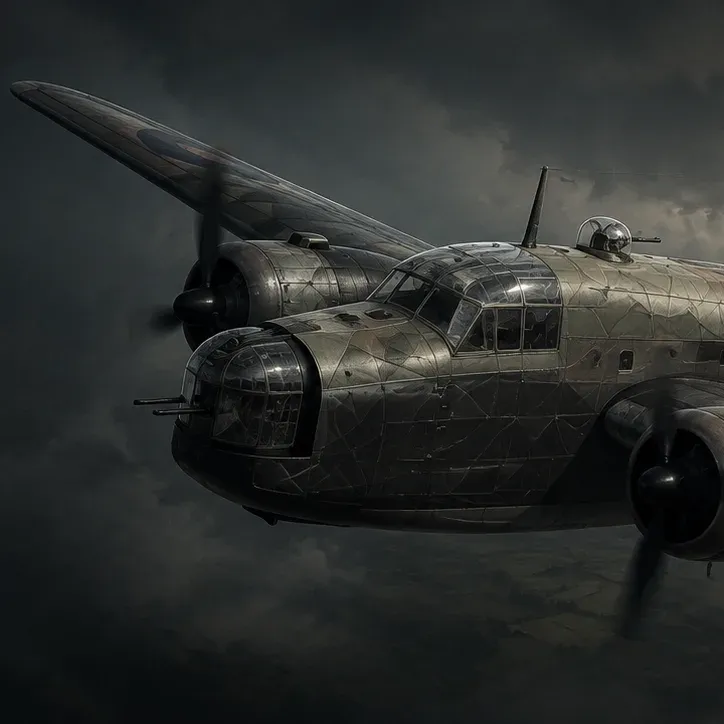
The Vickers Wellington (nicknamed the Wimpy) is a British twin-engined, long-range medium bomber designed during the mid-1930s at Brooklands in Weybridge, Surrey. Led by Vickers-Armstrongs chief designer Rex Pierson, its defining feature is the geodetic airframe fuselage structure principally designed by Barnes Wallis.
Development began in response to Air Ministry Specification B.9/32, issued in 1932, for a twin-engined day bomber. Other aircraft to the same specification included the Armstrong Whitworth Whitley and Handley Page Hampden.
The Wellington was used as a night bomber in the early years of WWII, becoming one of Bomber Command principal aircraft. During 1943 it was superseded as a bomber by the four-engined heavy bombers such as the Avro Lancaster. The Wellington continued to serve throughout the war in other duties, particularly as an anti-submarine aircraft with RAF Coastal Command.
The Wellington was the only British bomber produced for the duration of the war. It also served as a glider tug, transport, and crew trainer.
