Airfields
The Airfield Today
RAF Waddington
Image credit
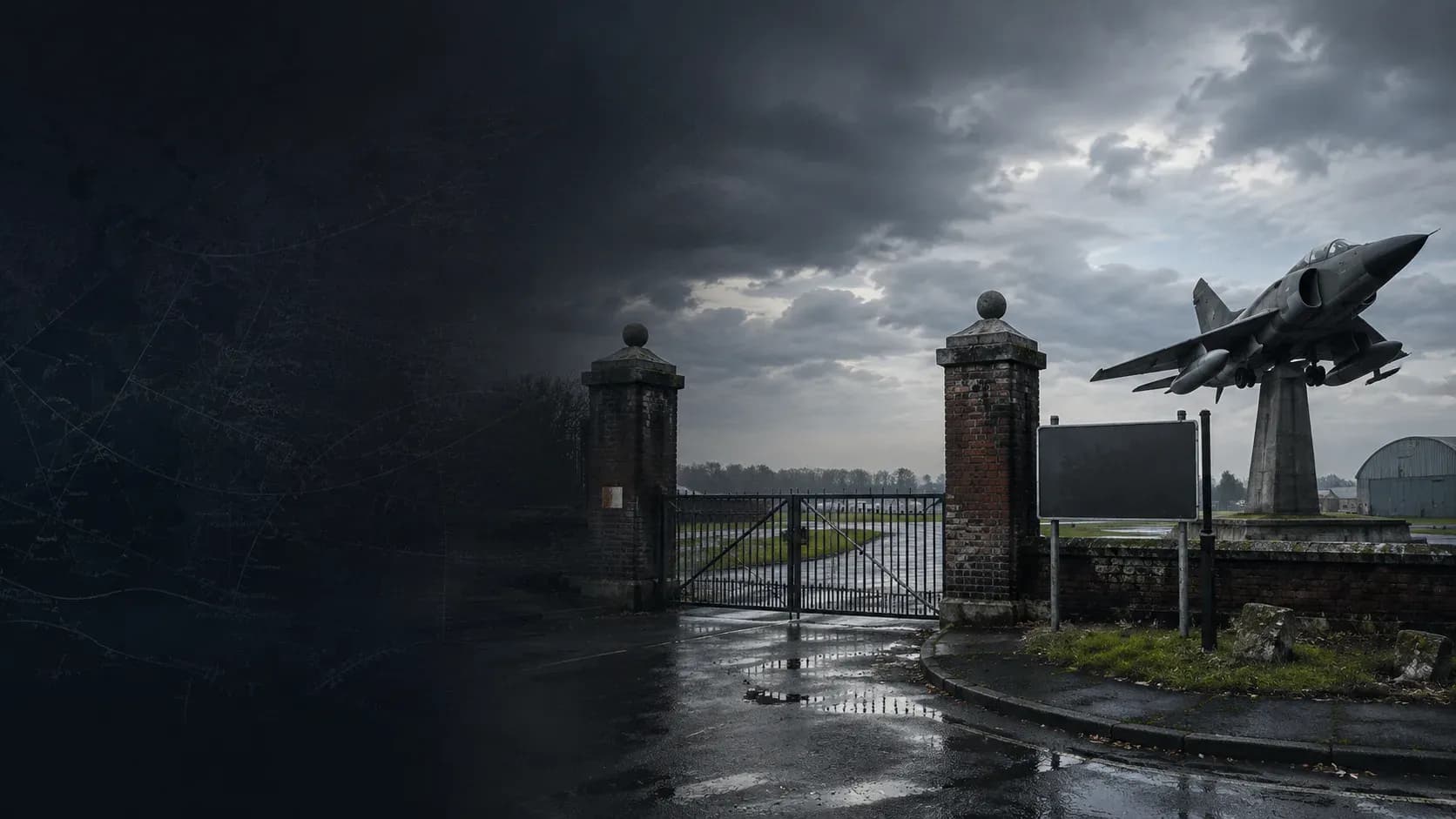
Waddington today is the RAF's intelligence hub — a working station of Rivet Joints, Shadows and Protectors, still busy above Lincolnshire with the Vulcan gate guardian watching over the gate.
RAF Waddington is one of the RAF's oldest continuously operating airfields, and its present looks very different from its past. The Lancasters and Vulcans are gone, replaced by a quieter, sharper fleet of intelligence aircraft — but the station itself is as busy as it has ever been. Waddington remains a fully operational front-line station, home of the RAF's ISTAR (Intelligence, Surveillance, Target Acquisition and Reconnaissance) force.
For the visitor, the most striking thing is the contrast. On one side of the fence, a modern operational airbase with secure perimeters, hardened infrastructure and aircraft whose work is largely invisible. On the other, the visible signs of a century of flying history: the Vulcan gate guardian, the station's memorials, and the sense that every corner of the airfield has been rebuilt more than once.
This page looks at Waddington as it is now — the units that fly from it, the infrastructure that supports them, and what remains visible to the public from one of the RAF's most continuously operational stations.
Present use
Waddington's modern identity is fixed: it is the home of the RAF's ISTAR enterprise. The role grew out of the station's post-Vulcan reinvention in the 1980s and 1990s, and today it is formalised in a purpose-built operational estate that includes the headquarters of the RAF's ISTAR force and the support infrastructure for its principal aircraft types.
The flying units based at Waddington today are specialists rather than bombers:
No. 51 Squadron operates the RC-135W Rivet Joint — the RAF's signals intelligence workhorse, a converted Boeing 707 airframe packed with electronic surveillance equipment, crewed by intelligence specialists as much as pilots.
No. 14 Squadron flies the Shadow R1, a light twin-turboprop reconnaissance aircraft used for battlefield surveillance and intelligence gathering over deployed operations.
No. 54 Squadron has taken on the Protector RG1, the RAF's newest remotely piloted aircraft system, which has begun operating from the station in place of the older Reaper force.
The station's aircraft rotate through deployments continuously — Rivet Joints and Shadows have been a constant presence over the Middle East and other operational theatres for years, often flying from Waddington itself or from forward bases. The public rarely hears about their missions, which is precisely the point of an intelligence force.
Surviving structures
Because Waddington remains a fully operational station, its historic fabric survives unevenly — some eras are well represented, while others have been redeveloped away. The most significant surviving structure is the Vulcan gate guardian on its plinth by the main entrance, which preserves the station's V-force identity in a way no building could.
Of the wartime airfield, comparatively little survives intact. The bomber-era hangars, dispersals and technical buildings that serviced the Lancasters were largely swept away or rebuilt in successive modernisations — a process that accelerated during the V-force years and again with the ISTAR build-out. Where wartime traces do remain, they tend to survive as grassed-over dispersals, the faint outlines of pan hardstandings, and boundary features around the airfield's edges.
The modern estate dominates the station today: the ISTAR headquarters, the Rivet Joint hangar complex and the supporting technical and logistics buildings. These are not heritage structures, but they are part of the station's continuing story — the visible evidence of Waddington's eighth decade of front-line service.
Condition
As an active RAF station, Waddington is maintained to front-line operational standards. The runways, taxiways and dispersals are in continuous use and kept in full working condition, supported by an ongoing programme of infrastructure renewal. This is the crucial difference between Waddington and the abandoned bomber stations of the same era: here, "condition" means a fully serviceable airfield, not a preserved ruin.
That operational upkeep comes at a cost to heritage. Structures that fall out of use are demolished or redeveloped rather than conserved, so the station's fabric reflects its current role, not its past. Visitors hoping to see a wartime bomber station will find instead a modern intelligence base — the past surviving mostly in the gate guardian, the memorials, and the station's operational continuity itself.
Memorials and museums
Waddington's public memorial heritage is modest but meaningful. There is no public museum on the station, and the base itself is not open to casual visitors — a consequence of its security-sensitive role. The principal visible memorial is the Vulcan gate guardian, XM607, which serves as the station's de facto war memorial and is clearly visible from the road.
The station's squadrons carry their own commemorative traditions, and the names of those lost in the bomber offensive are remembered through the wider Bomber Command memorial network around Lincolnshire — the county that lost more bomber crews than any other. Waddington's contribution to that history is also recorded in local church memorials and the Commonwealth War Graves Commission sites that surround the airfield. For those researching individuals, the station's operational record books and squadron histories are the place to start.
Access and viewing information
Waddington is a working, secure station, and public access is deliberately limited. There is no permanent visitor centre, no public museum, and no regular open day — the Waddington International Airshow, which once drew hundreds of thousands of people, ended in 2015, and public events are now occasional rather than annual.
For most visitors, the realistic options are roadside viewing and the gate guardian. The Vulcan on its plinth by the main gate is visible from the A15 south of Lincoln without entering the base, and it is the standard stopping point for those wanting to see the station's heritage. Aircraft movements are visible from the public road where the perimeter runs close to the highway, though security fencing and distance mean views are partial. The adjacent village of Waddington offers parking and the station's local history is reflected in the surrounding area — but anyone planning a visit should treat Waddington as an operational base first, and expect the security posture that comes with it.